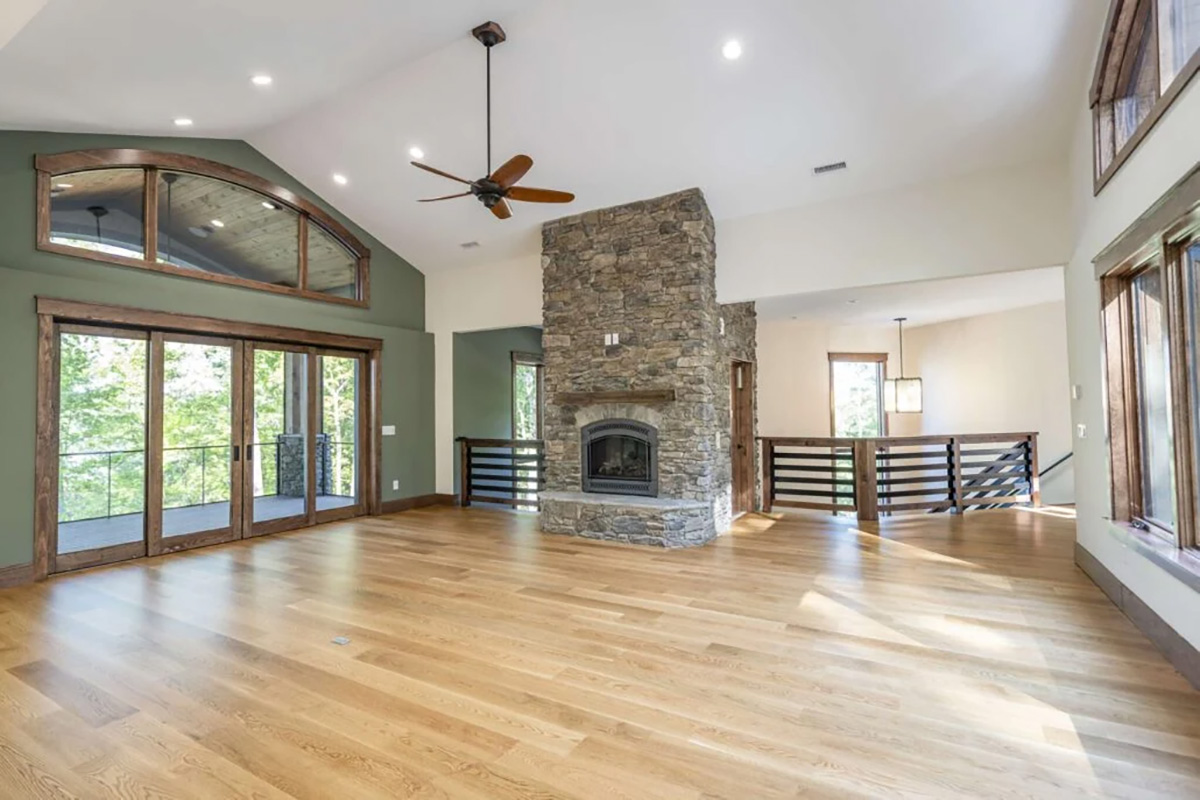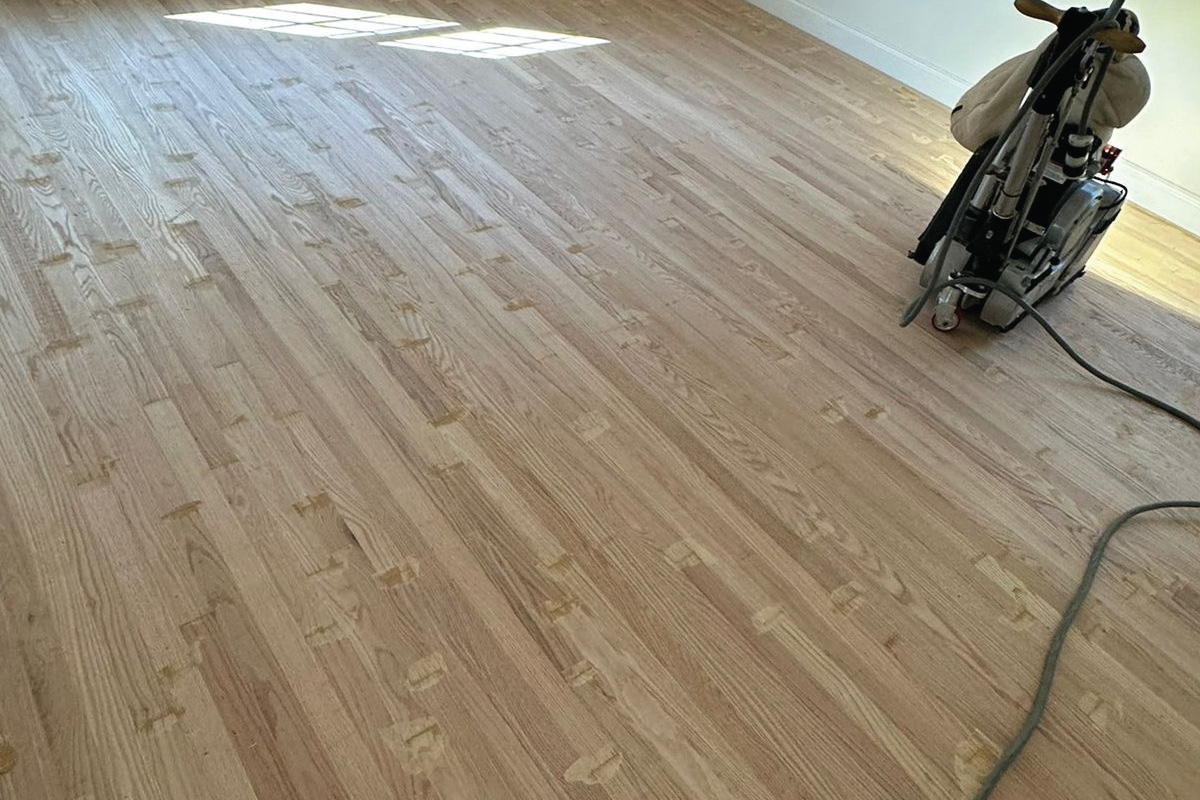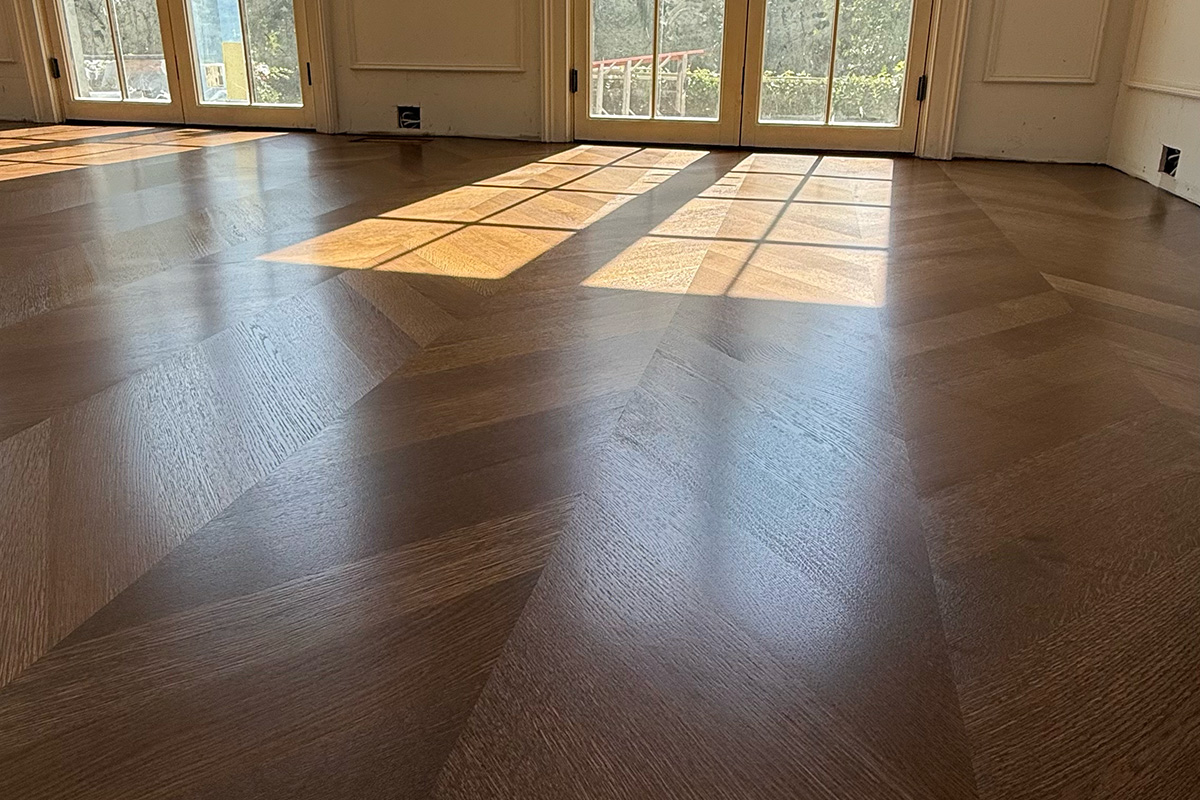
Walk into any showroom in New Jersey and the solid versus engineered hardwood question comes up within minutes. Both products look strikingly similar: both show real wood on the surface, both come in the same species and finishes, and once installed they are visually indistinguishable to most people. The meaningful differences are structural, and they determine where each product belongs and how long it will last.
At Gorsegner Brothers, we install both solid and engineered hardwood throughout Monmouth County, Mercer County, Ocean County, and Middlesex County. The product we recommend depends entirely on the specifics of the installation: what is the subfloor, what level of the home, what is the humidity profile, and what are the homeowner's long-term expectations. This guide covers the key differences so you can have an informed conversation before choosing.
What's the Actual Difference?
The distinction between solid and engineered hardwood is structural, not cosmetic.
Solid hardwood is exactly what it sounds like: a single piece of wood milled from top to bottom, typically 3/4" thick. Every layer of the board is the same species. When it is sanded, you are sanding real wood all the way through. The surface can be refinished multiple times because there is substantial wood beneath it. The tradeoff is that solid hardwood is sensitive to moisture and humidity; as a single piece of homogenous wood, it expands and contracts significantly across seasonal humidity cycles. This limits where it can be installed and requires careful climate management.
Engineered hardwood is a layered product. The top wear layer is a real wood veneer (typically 2 to 6 mm thick, depending on the product grade) bonded to a plywood or high-density fiberboard core that runs in perpendicular directions. The cross-ply construction dramatically reduces the expansion and contraction that occurs in solid wood. The surface looks and feels identical to solid hardwood because it is real wood. But the structural core is engineered for dimensional stability rather than refinishability.
Side-by-Side Comparison
- Surface appearance: Identical; both are real wood on top
- Moisture resistance: Engineered significantly better; solid not suitable for high-humidity or below-grade
- Refinishing cycles: Solid: 5–7 times; Engineered: 1–3 times (wear-layer dependent)
- Installation over concrete: Solid: not recommended; Engineered: suitable with moisture barrier
- Radiant heat compatibility: Solid: limited; Engineered: generally compatible
- Typical price range: Solid often slightly less expensive per square foot; engineered varies widely by wear-layer quality
Where Each Product Performs Best
The most important factor in choosing between solid and engineered hardwood is the installation environment, specifically the subfloor material, the level within the home, and the moisture conditions the floor will experience.
Above-grade wood subfloor
A second-floor bedroom or living area over a conditioned basement or heated crawlspace with a plywood subfloor is the ideal condition for solid hardwood. The subfloor is stable, moisture exposure is minimal, and the nail-down installation method is well suited to solid wood. This is the classic New Jersey installation scenario in existing homes built between the 1950s and 1990s, and it is where solid hardwood has decades of proven performance.
Concrete slab or on-grade installation
Concrete slabs are common in New Jersey additions, sunrooms, and first-floor applications in newer construction. Concrete transmits moisture vapor even when it appears dry, and that vapor will damage solid hardwood over time, causing cupping, swelling, and finish failure. Engineered hardwood, installed floating or glued with a moisture-barrier underlayment, handles this environment correctly. This is the appropriate product choice for most NJ on-grade or slab-on-grade applications in Freehold, Toms River, and similar Monmouth and Ocean County communities where post-war slab homes are common.
Radiant heat systems
Hydronic radiant heat, popular in higher-end NJ homes, creates a thermal cycling environment that is hard on solid hardwood. The regular heating and cooling of the subfloor amplifies the natural expansion and contraction of a solid wood board. Engineered hardwood's cross-ply core handles this cycling far better, making it the standard recommendation for any radiant heat installation across Monmouth County and beyond.
Below-grade or basement applications
Solid hardwood should not be installed below grade in New Jersey homes. Period. The combination of ground moisture, seasonal humidity changes, and the thermal dynamics of below-grade spaces creates conditions that will reliably damage solid hardwood over time. Engineered hardwood with appropriate moisture mitigation is the correct product for any NJ basement where real wood appearance is the goal.
Not sure which product is right for your subfloor?
We assess subfloor conditions before recommending any product, a step many NJ contractors skip. Serving Monmouth County, Mercer County, Ocean County, and Middlesex County.
Refinishability: How Many Times Can Each Be Sanded?
This is the most consequential practical difference between solid and engineered hardwood for homeowners planning to stay in their homes long-term.
Solid hardwood (3/4" thick) can be refinished approximately 5 to 7 times over its lifetime. Each full sand removes roughly 1/32" to 1/16" of wood, so the math limits the number of cycles before the boards become too thin to sand safely. In practice, a solid hardwood floor installed in a New Jersey home today could be refinished twice and still look excellent thirty years from now, making it a genuine generational-scale investment.
Engineered hardwood's refinishability is entirely a function of the wear-layer thickness the real wood veneer on top. Products with a 2mm wear layer can typically support one light sand, if any. Products with a 4–6mm wear layer can support two to three refinishes with normal sanding. The wide range in wear-layer quality across engineered products is significant: a premium engineered hardwood floor with a 6mm wear layer approaches the refinishing lifespan of a solid floor in practical residential terms, while a low-cost product with a 2mm layer is essentially a one-time-use floor.
"The wear-layer spec is the most important number in the engineered hardwood conversation. A 2mm veneer and a 6mm veneer look identical in the showroom; their long-term stories are completely different."
The guidance: if long-term refinishability is a priority, particularly for active households in Monmouth County or Ocean County NJ where floors see heavy use, specify wear-layer thickness before purchasing any engineered product. A minimum of 3mm is a reasonable threshold for a product that will tolerate at least one or two future refinishes.
Cost: Material, Installation, and Long-Term
The price comparison between solid and engineered hardwood is less clear-cut than it might appear. In general, solid hardwood is somewhat less expensive per square foot on the material side for comparable species and grade; the manufacturing process for engineered products adds cost. However, installation labor rates tend to be similar, and the total project cost difference is often smaller than homeowners expect.
Where the comparison gets more nuanced is in long-term cost over the life of the floor. Solid hardwood, with its higher number of refinishing cycles, has a lower cost-per-decade over a 40-to-50-year horizon compared to an engineered product that can only be refinished once or twice before requiring replacement. Premium engineered hardwood (3mm+ wear layer) closes this gap significantly.
Installation method also affects the total cost picture. Glue-down engineered hardwood installations over concrete require a moisture-vapor barrier product and additional surface preparation that can add $1–3 per square foot to the project. Nail-down solid hardwood on a wood subfloor has no comparable material add-on. These line items are often not immediately obvious when comparing material quotes side by side.
Ready to get a real project estimate?
We provide itemized quotes covering material, installation method, and subfloor prep so the full picture is clear before you commit.
Making the Right Choice for Your NJ Home
With all of the above in context, here is a practical decision framework for New Jersey homeowners choosing between solid and engineered hardwood.
Choose solid hardwood if: You are installing above grade on a stable plywood subfloor. You are in a climate-controlled space where humidity is managed year-round. You want the maximum refinishing lifespan and are planning to stay in the home long-term. Your home does not have radiant heat. The installation is a second-floor bedroom, upper-level living space, or any area that is well above the water table and moisture sources.
Choose engineered hardwood if: You are installing over a concrete slab, on-grade, or below grade. You have radiant heat. Your NJ home has a crawlspace with variable humidity that is not fully conditioned. You are installing in a coastal Ocean County home where seasonal humidity swings are pronounced. You want the look of hardwood in a location where solid would be a technical risk.
In many New Jersey first-floor applications, particularly in older homes where the first floor sits over an unconditioned crawlspace, engineered hardwood is the technically correct recommendation even when the aesthetic preference would be for solid. The cost of a moisture-related floor failure (buckling, cupping, full replacement) is always more than the modest premium a quality engineered product costs upfront.
For more on the installation process and what to expect from start to finish, see our complete hardwood flooring project guide. And for help choosing the right species for your engineered or solid floor, see our hardwood floor species guide.
Hardwood floor installation across NJ
We install both solid and engineered hardwood throughout Monmouth County, Mercer County, Ocean County, and Middlesex County, and we assess your subfloor before recommending either product.
Frequently Asked Questions
Is solid or engineered hardwood better for NJ homes?
Neither is universally better; the right choice depends on your subfloor, installation level, and budget. Solid hardwood is the better long-term investment on a stable, above-grade wood subfloor where moisture is not a variable. Engineered hardwood is often the technically correct choice over concrete, on radiant heat, or in below-grade applications. In New Jersey homes where the first floor sits over an unconditioned crawlspace or concrete slab, common in Ocean County and parts of Middlesex County, engineered hardwood is typically the recommended product.
Can engineered hardwood be refinished?
Yes, but with important limitations. Engineered hardwood can typically be refinished 1–3 times depending on the wear-layer thickness. Thin-veneer products (2mm or less) may only tolerate one very light sand. Thicker wear layers (4–6mm) can support two or three full refinishes. Knowing the wear-layer thickness of your specific product is essential before scheduling a refinish; this information should be on the manufacturer's spec sheet or product data file.
Is engineered hardwood as durable as solid hardwood?
The surface hardness of engineered hardwood is identical to solid hardwood of the same species because the wear layer is the same real wood. Daily wear resistance and appearance over time are on par with solid for quality engineered products. The structural stability of engineered hardwood is actually superior to solid in variable-humidity applications, because the cross-ply core resists seasonal expansion and contraction. Where solid hardwood has a durability advantage is in refinishing lifespan; it can be sanded more times over its total life.
Does engineered hardwood add the same resale value as solid hardwood?
High-quality engineered hardwood adds comparable resale value to solid hardwood in most New Jersey markets, including Monmouth County and Ocean County. Buyers typically cannot distinguish the two by look or feel, and real estate professionals confirm that quality engineered hardwood is viewed as a premium feature equivalent to solid. Budget or thin-veneer engineered products may be viewed more skeptically by informed buyers; product quality matters here.
Can solid hardwood be installed in a basement in NJ?
Solid hardwood is not recommended for below-grade applications like basements in New Jersey. The combination of ground moisture, seasonal humidity variability, and the thermal dynamics of below-grade spaces creates conditions that reliably lead to cupping, gapping, buckling, or finish failure in solid hardwood over time. Engineered hardwood with a moisture-barrier underlayment is the appropriate product for any New Jersey basement application where real wood appearance is the goal.