Why Hardwood Floors Gap in Winter
Wood takes on moisture from the air and gives it back. When the air is humid, the boards swell. When it is dry, they shrink.
New Jersey swings hard both ways. Summers are humid. In winter the heat runs for months and the air inside gets very dry. Each board shrinks a little across its width, and the shrinking shows up as a line between boards.
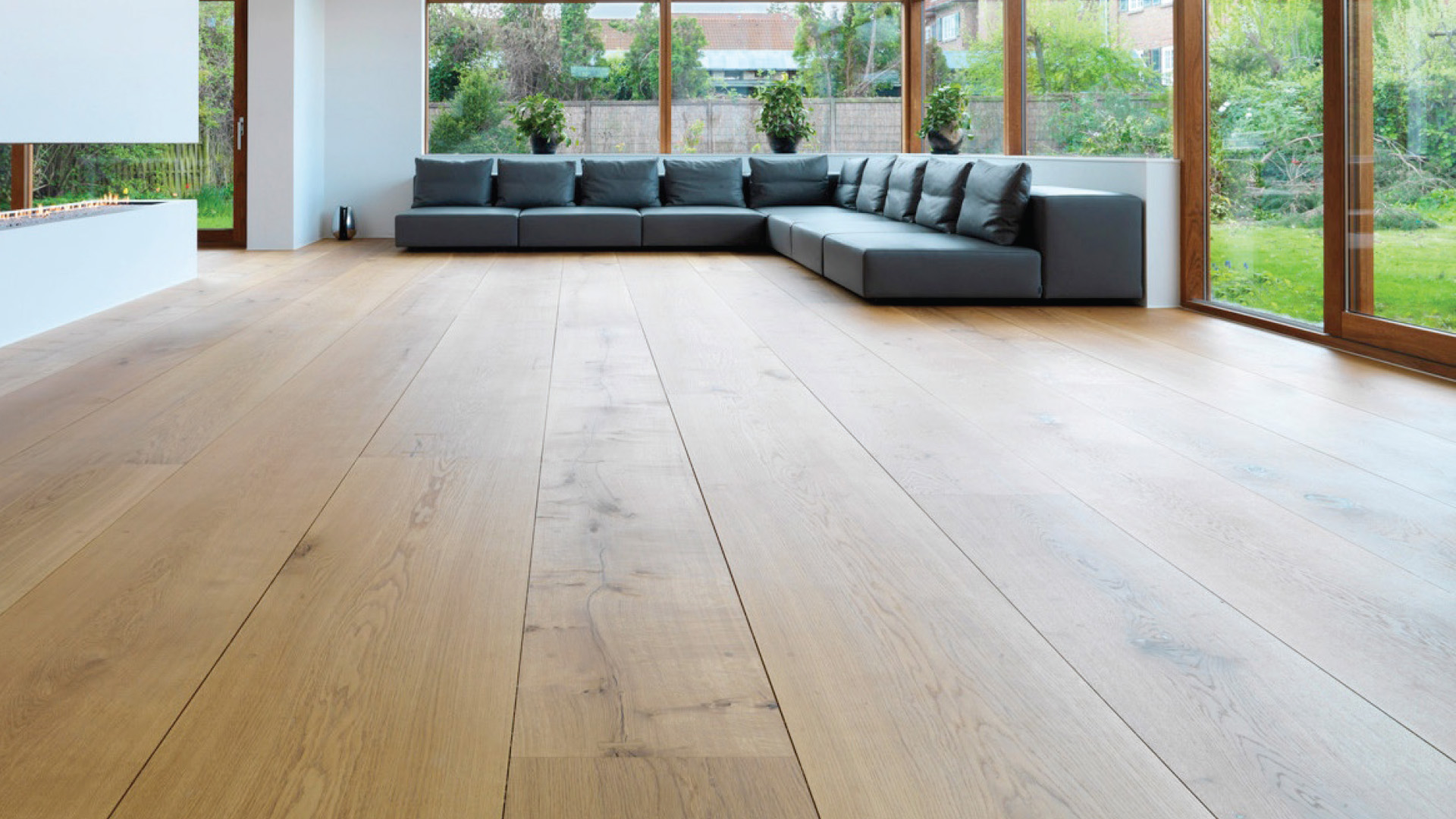
The wider the board, the wider the gap. The National Wood Flooring Association (NWFA) says gap size grows in direct proportion to board width. A 5 inch plank will show more of a gap than a 2 1/4 inch strip floor in the same room.
Species matters a little too. NWFA's numbers show white oak moves more across the board than red oak does (10.5% shrinkage from green to dry, against 8.6% for northern red oak). Both are normal floors. White oak just shows the seasons a bit more.
Normal Gap or a Problem?
Watch the gap through one summer.
| Seasonal (normal) gap | Problem gap | |
|---|---|---|
| When you see it | Winter, with the heat on | All year |
| What happens in summer | Closes up, or nearly | Stays open |
| Where it shows | Spread evenly across the floor | Can be one area, or lines repeating at regular spacing |
| What it needs | Humidity control, nothing else | A look at the install, the moisture and the subfloor |
NWFA lists the usual causes of a gap that does not close:
- The boards were not put down tight, or debris got caught between them.
- The wood was installed wetter than the house normally keeps it, then dried out and shrank for good.
- Water got to the floor, crushed the board edges, and they never fully came back.
- The subfloor has a problem. Gaps that repeat at the same spacing across a room often line up with the subfloor seams underneath.
Loose boards, boards that move when you step on them, or boards that have started to lift are past the "wait for summer" stage. That is the point to have someone look.
How to Keep Gaps Small
The fix for seasonal gaps is the air in the house, not the floor.
NWFA's guideline, when the flooring maker gives no other number, is to keep the house between 60°F and 80°F and between 30% and 50% relative humidity all year. A humidifier during the heating season and a dehumidifier or air conditioning in the humid months keep the wood close to the same moisture all year. A cheap humidity gauge (a hygrometer) tells you where your house sits.
Do that, and seasonal gaps get much smaller or go away. NWFA says they can be "minimized or completely eliminated" this way.
Want a price for your own floor?
Free in-home estimates across Monmouth, Mercer, Ocean and Middlesex counties. See our hardwood floor sanding and refinishing services.
Should You Fill the Gaps?
Not in winter.
NWFA is direct about this. In places with big humidity swings, filling seasonal gaps in the dry season will likely damage the floor. When summer comes, the boards swell back, the filler is in the way, and the edges get crushed. That damage does not undo itself.
If a gap stays open all year, filling it can make sense, but only after the cause is fixed. Filling over loose boards or a moving subfloor just means the filler pops out again.
What a Gap Repair Costs
When a gap needs work, it is usually a small repair. On jobs our customers approved from March 2024 to October 2026, 16 repairs were for gaps, loose or raised boards. A typical one ran about $410, and most landed between $350 and $480. A short gap does not cost much less than a long one. Most of the work is the same either way: refastening or cutting out the boards, fitting new ones where needed, and finishing them to match.
That fixes the boards themselves. If the cause is the subfloor or a failed install across the room, it is no longer a small repair. Our hardwood floor repair cost guide covers when a repair turns into a new floor, and our installation cost guide covers what that costs.
Many customers fix the gap when they refinish. Sanding takes the whole floor down to bare wood, so the repaired boards and the old ones finish the same. See our refinishing cost guide for those prices.