Where Water Damage Comes From
In our experience, the most common source is a kitchen appliance, like the dishwasher or the fridge. A slow leak under one can go on for months before anyone sees it. The floor in front of it starts to lift at the edges, then darken.
The second is a leak from above. A toilet or a tub on the second floor leaks through the ceiling and ruins the floor in the room below. The floor is the victim, not the cause.
Here is where the water was on our 58 jobs. One job can have more than one spot.
| Where | Jobs |
|---|---|
| Kitchen | 20 |
| Bedroom | 10 |
| Foyer | 7 |
| At an exterior door | 6 |
| Living room | 5 |
| Hallway | 5 |
| Along an outside wall | 5 |
| Dining room | 4 |
| Powder room | 3 |
Sinks, washers and pet water bowls show up too. In the kitchen, a mat on the floor can hide a leak until the damage is done.
What It Costs to Fix Water-Damaged Hardwood
| What we did | Jobs | Typical | Most jobs |
|---|---|---|---|
| Replaced the damaged boards, then sanded and refinished the room or more | 38 | $4,667 | $2,374 to $7,870 |
| Tore out the damaged floor and installed a new one, a whole room or more | 8 | $6,381 | $4,485 to $11,720 |
| Replaced the damaged boards only | 6 | $1,200 | $950 to $1,338 |
| Sanded and refinished only, no boards replaced | 2 | — | $2,670 and $3,414 |
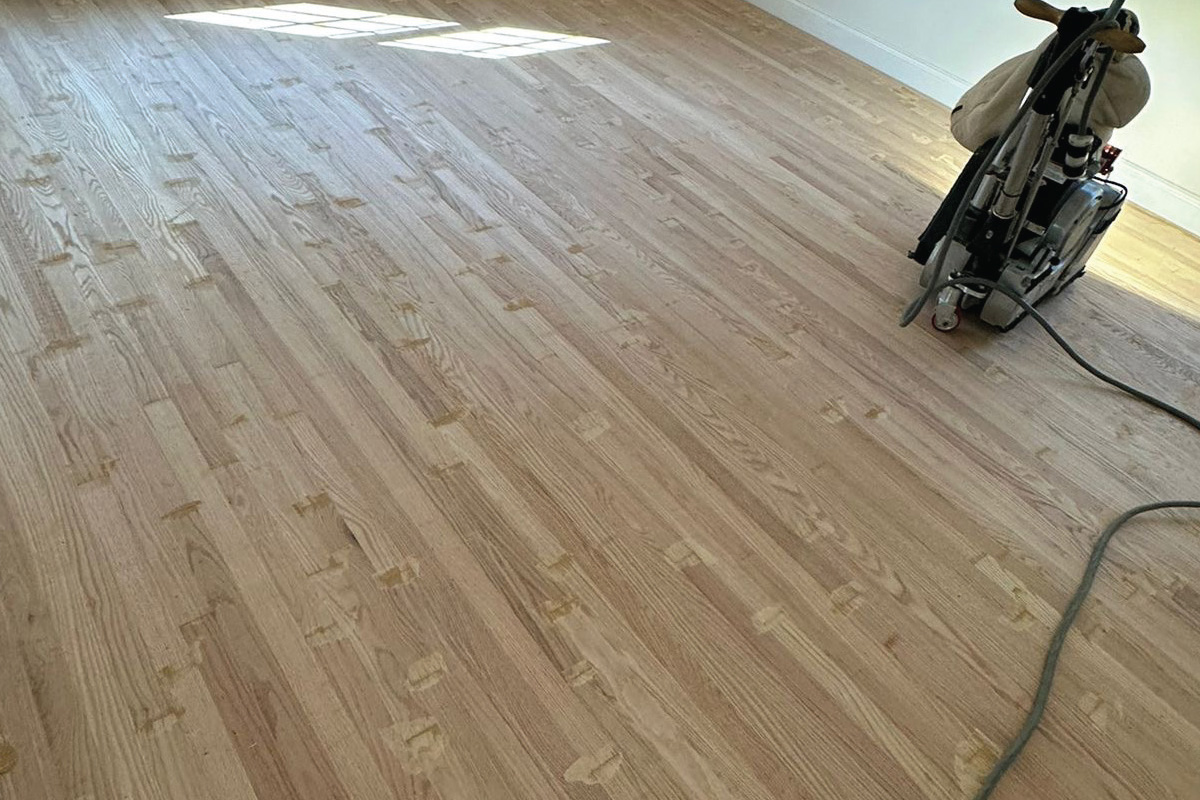
The repair part alone, taking out and replacing the damaged boards, is usually around $670 on our quotes. What makes the total bigger is the refinish. New boards next to old ones will not match until the whole area is sanded and finished together. On a typical job in the first row we refinished about 600 square feet, often several rooms.
These prices are for the floor work only. Some customers had us paint or redo the stairs on the same visit, and that work is left out of the numbers. Painting the base and shoe molding around the repaired floor stays in, since it is part of the floor job. Read more in our hardwood floor repair cost guide.
When the damage spreads across a room, replacing the floor in that room is the better job. That is the second row. Those prices are for a new floor across at least one whole room, often a kitchen and sometimes several rooms. They are not the price of a patch.
Want a price for your own floor?
Free in-home estimates across Monmouth, Mercer, Ocean and Middlesex counties. See our hardwood floor sanding and refinishing services.
Why the Floor Has to Dry First
This is the part people do not want to hear. Nothing should be repaired or sanded until the floor is dry. Fixing it too early makes it worse.
Here is what happens if you sand a wet, cupped floor. The raised edges of each board get sanded flat. Then the wood keeps drying and shrinking. The edges you sanded down sink below the middle of the board. The floor ends up crowned, which is the opposite problem, and it cannot be fixed by sanding again.
So the order is always the same:
- Find and stop the leak.
- Take out the boards that are too damaged to save.
- Let the area dry. We use blowers on the subfloor when it helps.
- Take moisture readings on the subfloor and the floor.
- Check the subfloor is solid.
- Then repair, and refinish.
How long does drying take? The National Wood Flooring Association says it can take weeks, months, or even a whole heating season. Their rule of thumb: if the top and the underside of a board differ by 2% moisture content or more, it is not done drying. We go by the readings, not the calendar.
Will a Cupped Floor Go Back to Flat?
Cupping is when the edges of each board rise higher than the middle. It happens because the underside of the board is wetter than the top.
If the cupping is very slight, the boards can flatten again once the moisture evens out. If they are cupped a lot, they usually stay that way, and they need to be replaced. There is no shortcut. A floor that is sanded flat while it is still cupped will crown later, as described above.
What We Fix, and Who Does the Framing
We handle the wood floor and the subfloor under it. That means removing damaged flooring, drying and checking the area, repairing or replacing plywood, and putting in new hardwood that matches.
If the water has reached the framing of the house, the joists under the floor, the job gets bigger. For that part we bring in the framer we work with on larger projects. Once the framing is repaired, we put in the subfloor and the new floor.